
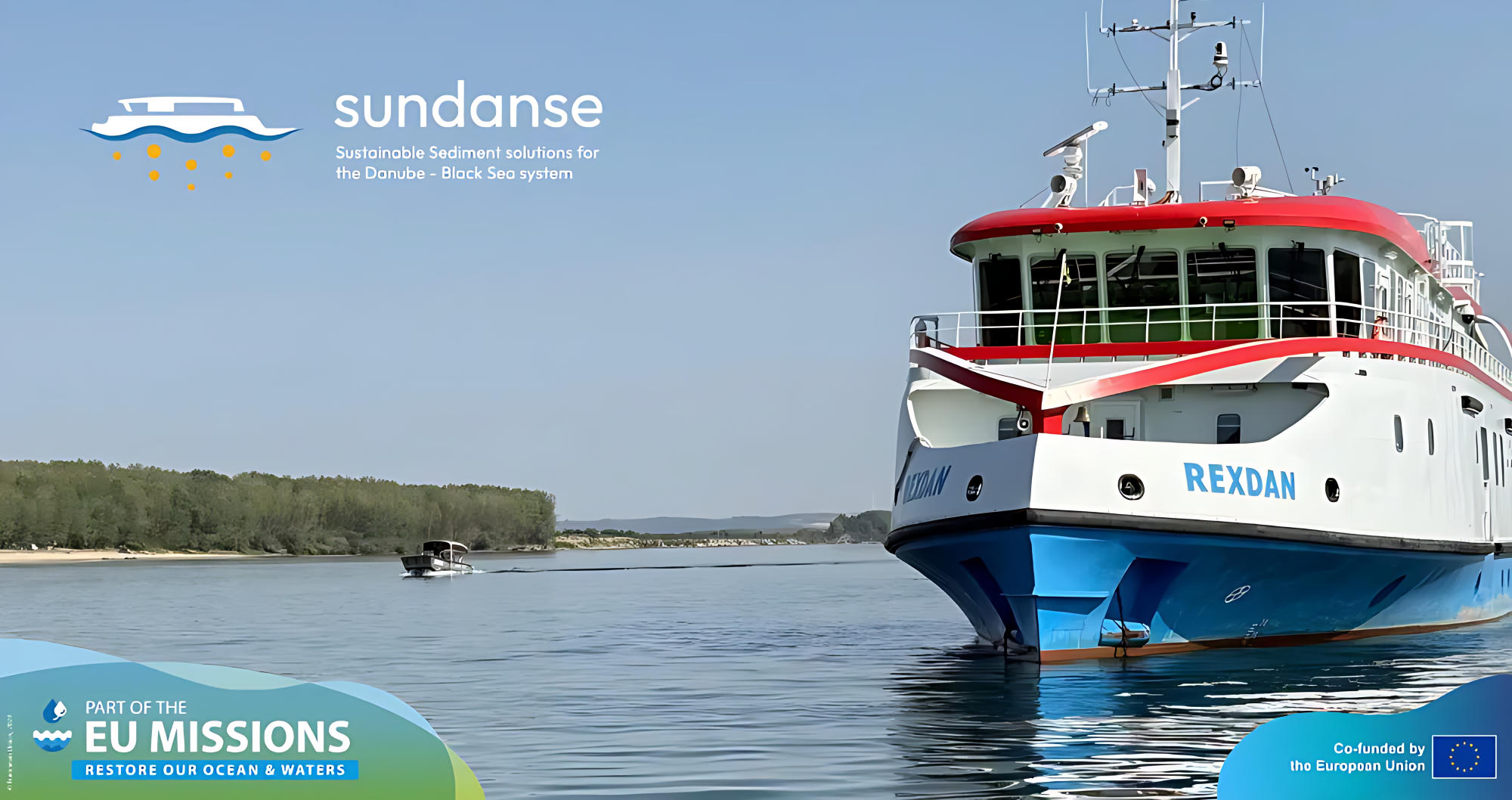
Research on the Danube looks like an action movie, but the stakes are real. Image: SUNDANSE
Source: waternewseurope.com
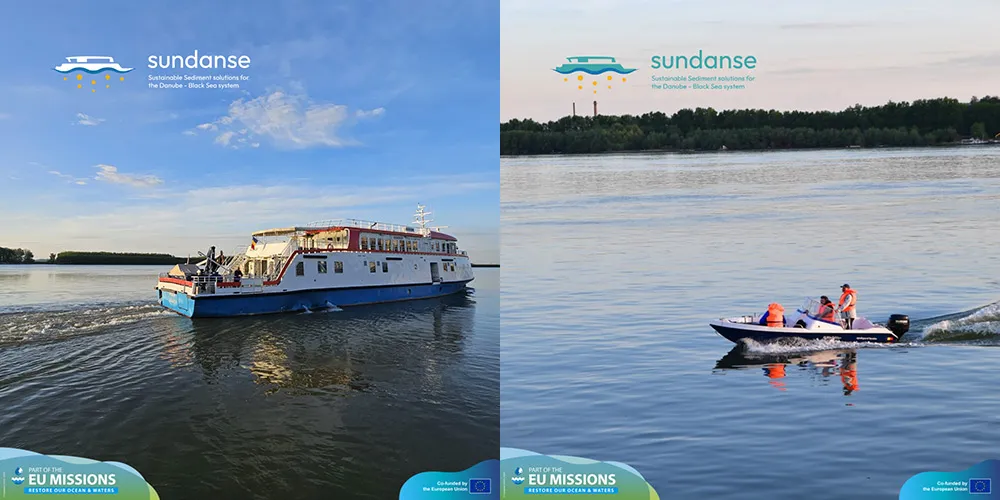
People along the Romanian stretch of the Danube last month may have witnessed scenes resembling an action movie. The research vessel REXDAN sped across the river while scientists monitored how its movement influenced sediment dynamics beneath the water surface. Smaller research boats criss-crossed the river, collecting data from bank to bank and ensuring that every section of the study area was covered. As evening fell, the teams returned to their floating base, where researchers gathered to analyse the data collected throughout the day and prepare for the next round of measurements.
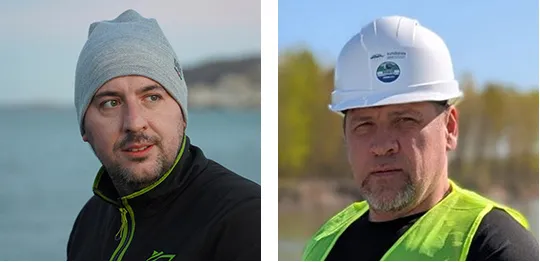
Behind these impressive scenes lies an important mission. The scientists are part of the European SUNDANSE project, which aims to improve understanding of sediment transport in the Danube. Their findings will contribute to the development of a Danube Sediment Management Handbook, designed to help restore river ecosystems while ensuring that the river remains a reliable transport route for future generations. Water News Europe spoke to two researchers who participated in the May campaign aboard on the REXDAN on the Danube in Romania. Mihai Dragomir from the Romanian partner Marine Research (MR) and Vladislav Balinsky from the National Ecological Centre of Ukraine (NECU). Both of them were enthusiastic about the results they achieved.
Climate change affects the Danube
The Danube river is changing rapidly. Due to droughts and floods, navigation on the international waterway is severely affected and the river’s rich biodiversity is also declining. The mission in May was the third research mission in the Romanian part of the Danube. The objective this time was to map the disrupted natural sediment balance in the river and find solutions for restoring the Danube. For this work the European funded SUNDANSE project is using an advanced research vessel, called REXDAN. Nearly a hundred researchers from ten different countries, and a multinational team of experts are conducting research across multiple sectors and Danube countries to develop a Danube Sediment Management Handbook, a vital tool for policy makers and water authorities.
Romanian research section of the Danube
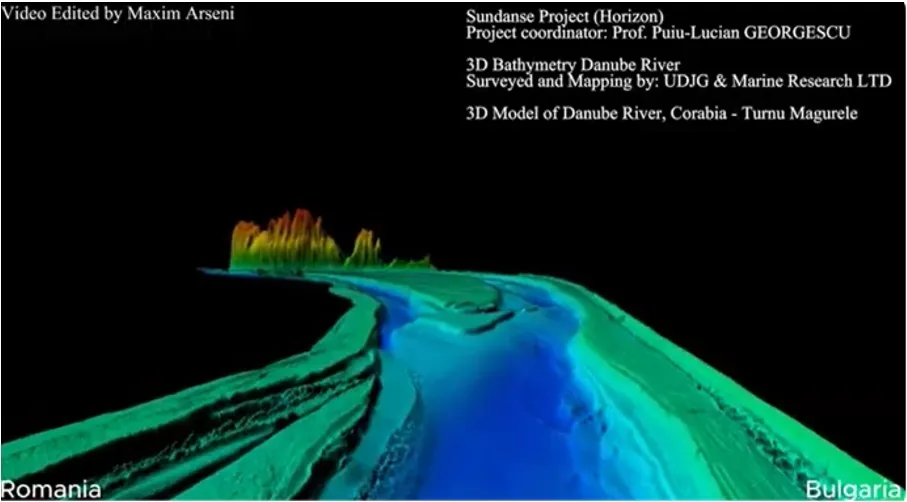
The Romanian research sector in May covered about 23 km long from river kilometer 602 to river kilometer 625. From a hydrological point of view this is a free-flowing section of the Danube with a water level difference registered of about 5 meters, recorded in 2024. The research in Romania stretched from the city of Corabia to the city of Turnu Magurele. This area includes three crucial points for navigation: two at Calnovat and one at Semovit. Maintaining these points is essential for safe and efficient navigation on the Danube.
Developing a Digital Twin
Mihai Dragomir is senior surveyor and commercial director at Marine Research, a small Romanian company that contributes small boats with state-of-the-art equipment and experienced hydrographic surveyors. “Our company is one of the main partners in the SUNDANSE project. The Danube is changing rapidly. You can already see how this wild river has transformed into an area with beaches where people relax under umbrellas. During the measurements in May, we wanted to assess the impact of the propellers of vessels travelling at full speed on the sediments at the bottom of the river. REXDAN itself was used for these measurements. The results may help one of the other SUNDANSE partners develop a digital twin of the Danube. Tools like this can help designers develop efficient and sustainable solutions such as dikes or nature-based measures.”
Real-life sampling
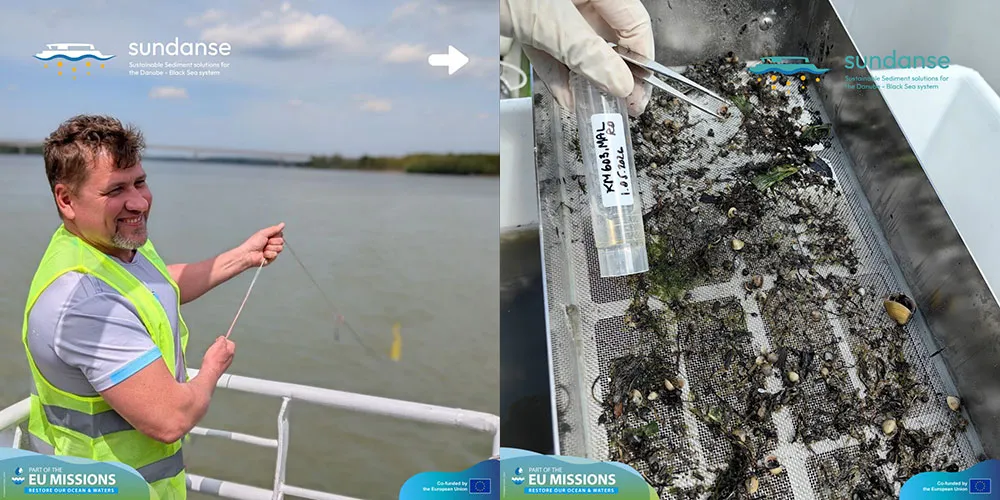
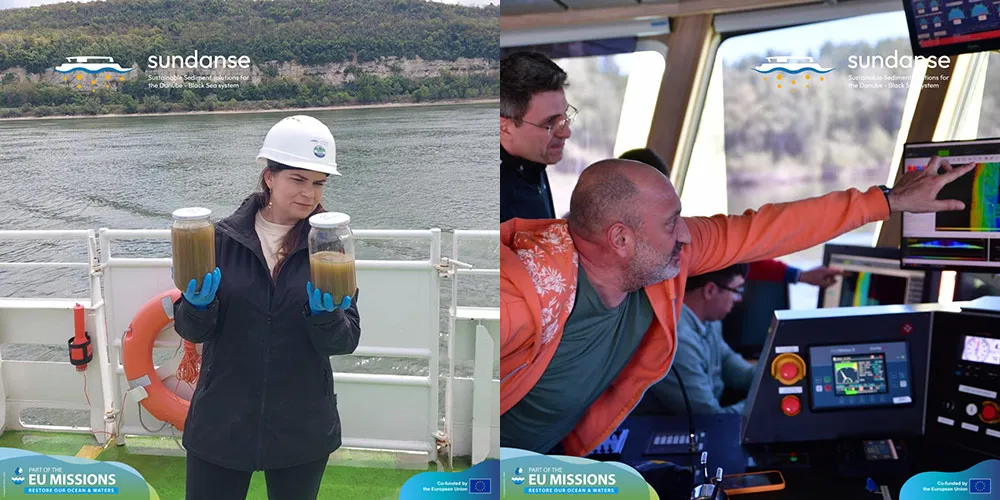
Biologist and Head of the Odesa Branch of the National Ecological Centre of Ukraine (NECU) Vladislav Balinsky, conducted research on suspended sediments and pollutants, including microplastics, heavy metals and minerals together with the University of Galați (UDJG). “We developed a trap to catch small particles of pollutants”, explains Balinsky. “We successfully collected representative samples and measurements under real navigation conditions. This is vital because it shows how the river behaves during daily traffic, rather than in a closed environment. The data help understanding which parts of the Danube are most affected by pollution and how sediment transport varies from one sector to another.”
Finding evidence for war crimes
Balinsky is an expert in tracking pollution and analysing water samples. He analysed satellite images to follow fuel oil that russian tankers spilled in the Black Sea. These results may become crucial evidence in the investigation of Russian war crimes. “After the attack on the Kakhovka dam in Ukraine NECU is investigating more Russian war crimes. We are also trying to find evidence for the ecocide caused by the leaking of sunflower oil on the Black Sea after Russian attacks on sunflower oil storages in December 2025. Large food oil spills can be very harmful and need a similar containment response as regular oil spills. We are modelling the spread of this kind of pollution to predict damages”, explains Balinsky while he is on his way back from a meeting in Paris to Odessa.
Enthusiastic research team
Mihai Dragomir is enthusiastic about the latest mission in Romania. “REXDAN functioned as a mothership and after a work day we all went on board. I was personally surprised that all the people on the ship were really interested to see the results of the daily measurements. We are now in the phase of comparing all the data. Eventually we will also share the data in the European portals European Environment Information and Observation Network Eionet and the European Marine Observation and Data Network EMODnet. “We noticed that the dynamics of the Danube have changed a lot since last year. The intention was this year to start measuring with high water levels, but just before we started the water levels dropped dramatically.” Balinsky says that he is now busy writing a scientific paper based on the new data.
The work continues
In the meantime, the REXDAN vessel has continued its mission from Romania to Austria and back between 4 and 29 June 2026. All the data gathered by the diverse team of experts that participate in the SUNDANSE project will help the Danube face climate challenges. The partners come from Romania, France, Belgium, Israel, Serbia, Estonia, Ukraine, Austria, Bulgaria and Ireland and the project runs from June 2024 until June 2028.
More information
SUNDANSE partner page on Water News Europe
Website SUNDANSE project
Funded by the European Union. Views and opinions expressed are however those of the author(s) only and do not necessarily reflect those of the European Union or European Climate, Infrastracture and Environmen Executive Agency (CINEA). Neither the European Union nor the granting authority can be held responsible for them.