
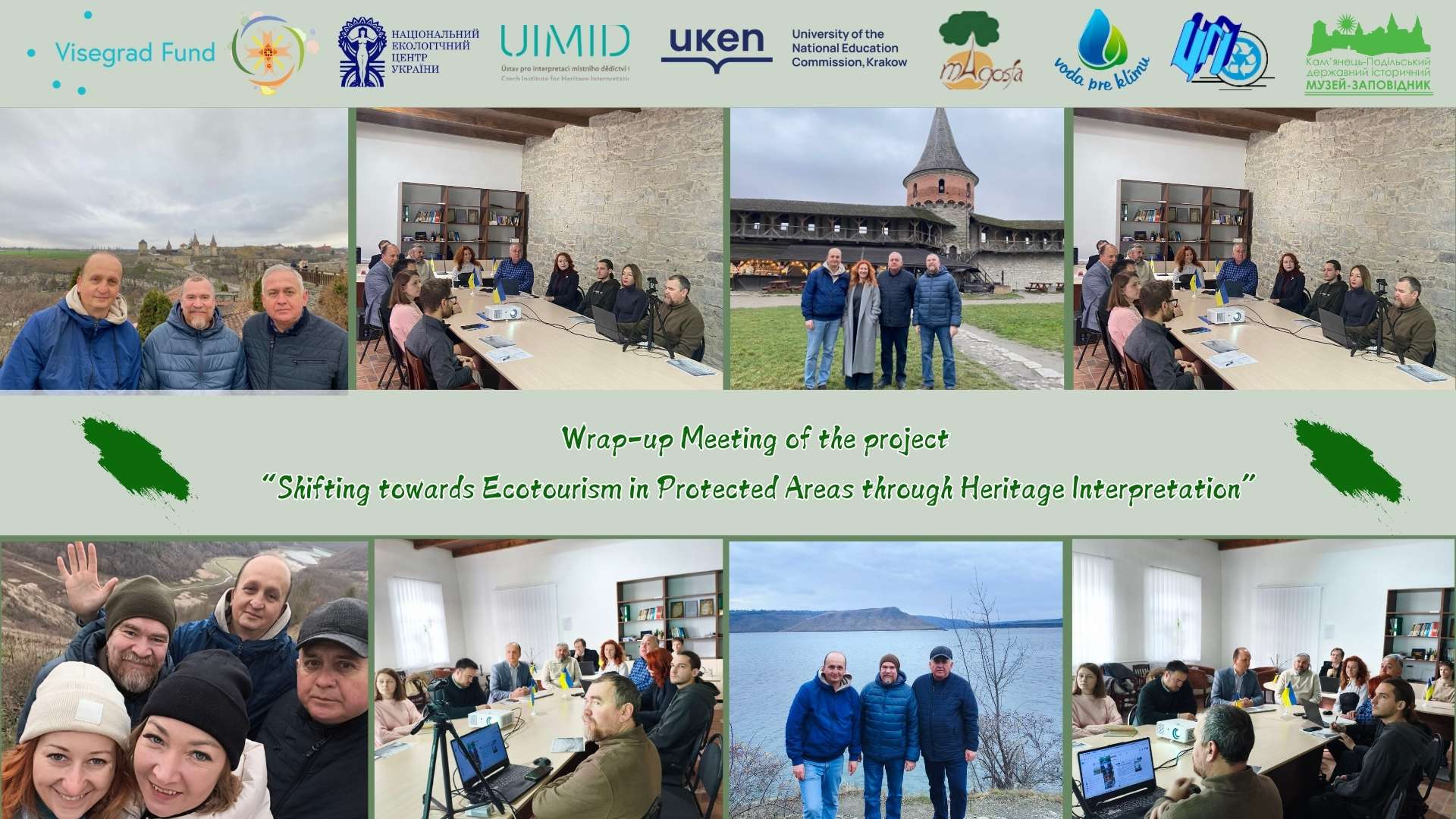
On 15 December 2025, the Wrap-up Meeting of the international project “Shifting towards Ecotourism in Protected Areas through Heritage Interpretation” took place in a hybrid format: in person at the Kamianets-Podilskyi State Historical Museum-Reserve and online via the Zoom platform. The project is implemented by the National Ecological Centre of Ukraine with the support of the International Visegrad Fund.
The event brought together representatives of protected areas, museum institutions, educational establishments, the expert community, and civil society organisations from Ukraine and the Visegrad Four countries.
The purpose of the meeting was to summarise the implementation of the project, present key outcomes and success stories, and discuss prospects for further cooperation in the field of ecotourism development and the interpretation of natural and cultural heritage.
The meeting opened with a welcome address by the event moderator, the Deputy Chair of the National Ecological Centre of Ukraine, who introduced the project team and the NECU delegation, including the NECU Chair, Ruslan Havryliuk, and the Executive Director, Yevhen Bovsunovskyi.
Welcome remarks were delivered by:
- Vadym Mendohralo, Deputy Mayor of the Kamianets-Podilskyi City Council.
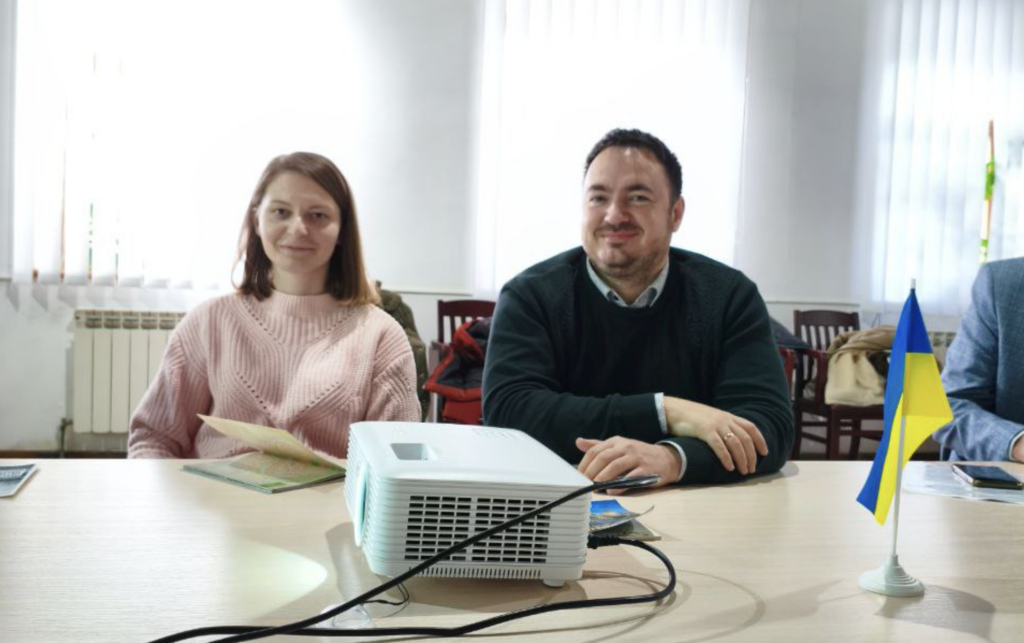
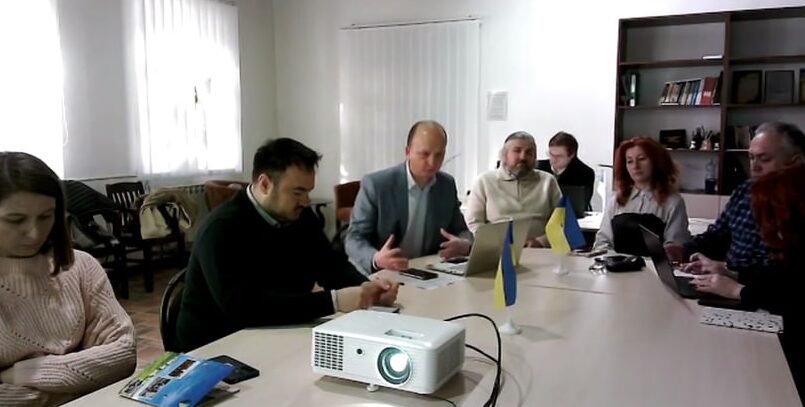
- Ruslan Havryliuk, Head of the National Ecological Centre of Ukraine and National Coordinator of the Ukrainian Platform of the Eastern Partnership Civil Society Forum. In his address, he emphasised the importance of cross-sectoral cooperation, the role of civil society, and international support in implementing sustainable approaches to the management of protected areas.
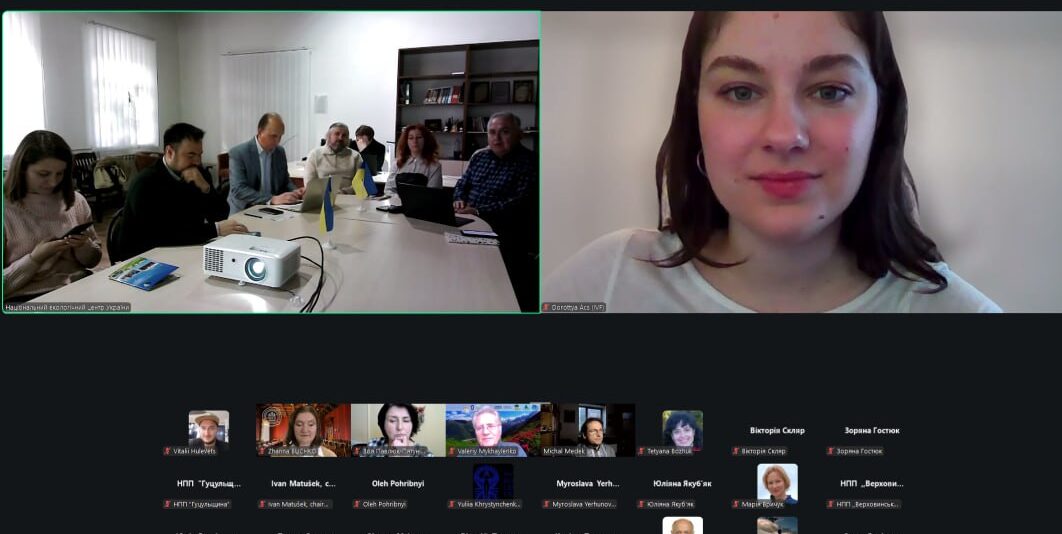
- Dorottya Ács, Project Manager at the International Visegrad Fund, highlighted the importance of the project as an example of effective regional cooperation and congratulated the team on the successful implementation of the project.
- Oleksandra Svyrydiuk – Director of the Kamianets-Podilskyi State Historical Museum-Reserve;
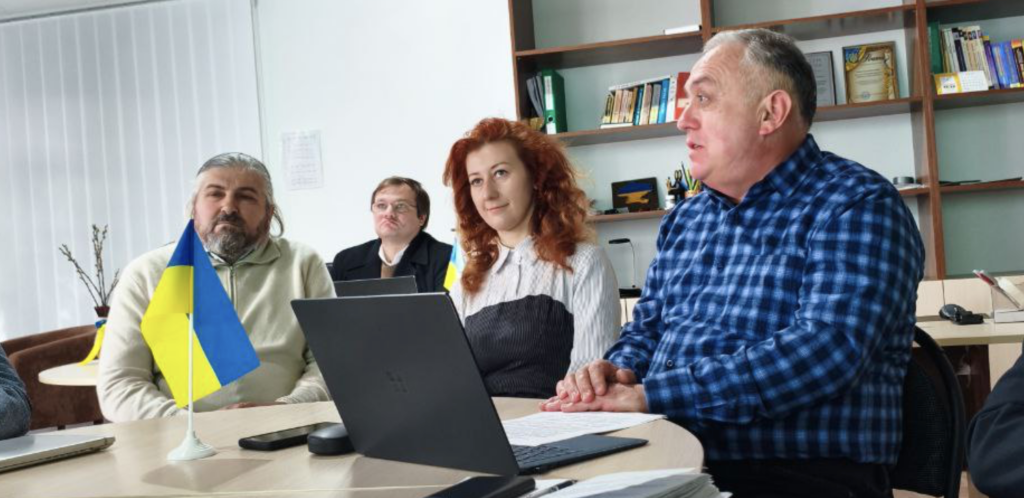
Oleksandr Lubinskyi (left), Professor of the Department of Biology and Ecology at Kamianets-Podilskyi Ivan Ohiienko National University
- Veronika Butorina – Head of the Department of Tourism and Hotel and Restaurant Business, and Oleksandr Liubinskyi – Professor of the Department of Biology and Ecology at Ivan Ohienko Kamianets-Podilskyi National University;
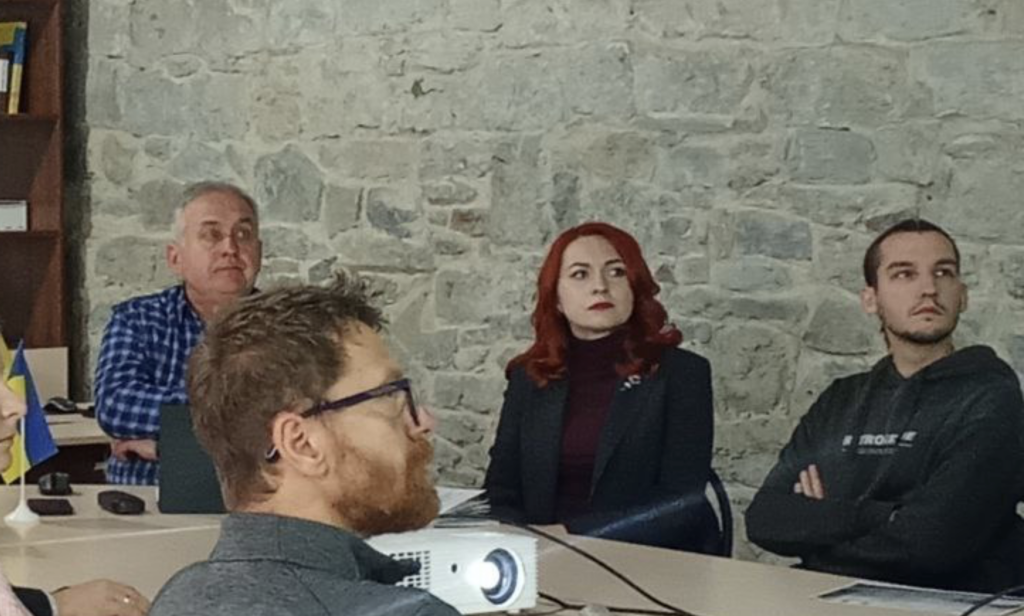
- Iryna Antoniuk – Director of the joint municipal enterprise “Ponyzzia”.
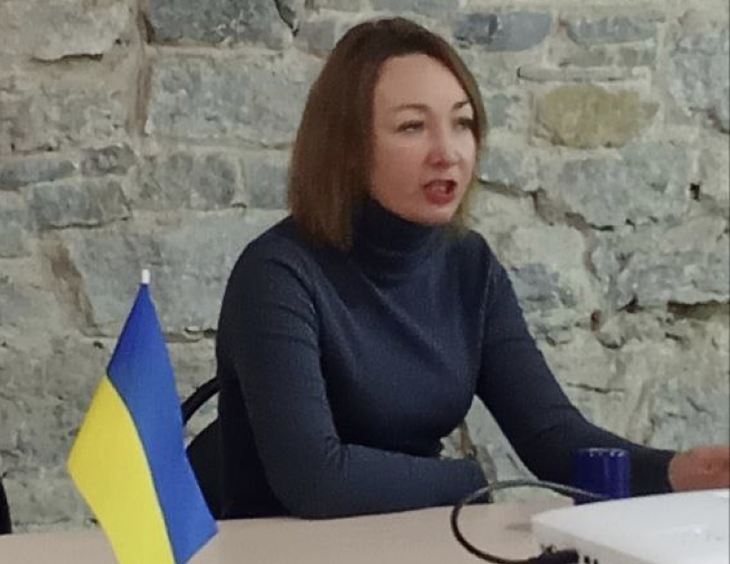
During the presentation block, participants became acquainted with the experience of the Visegrad Group countries in implementing ecotourism tools through heritage interpretation.
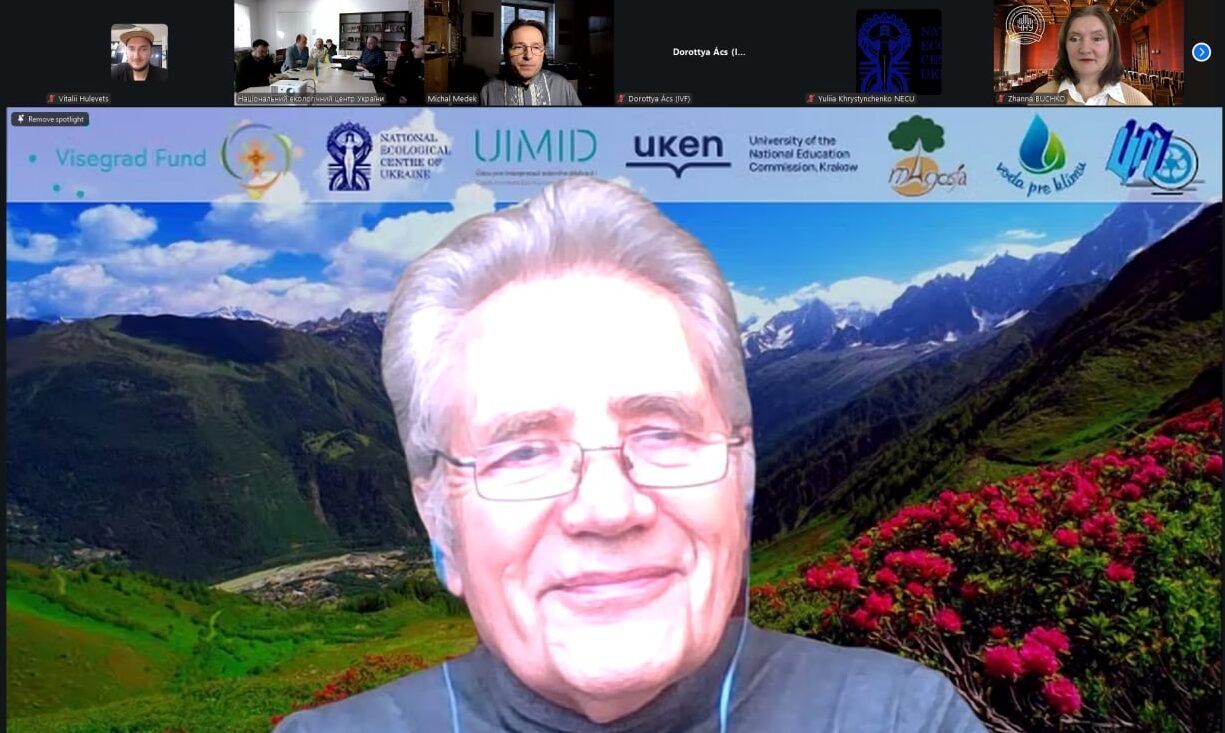
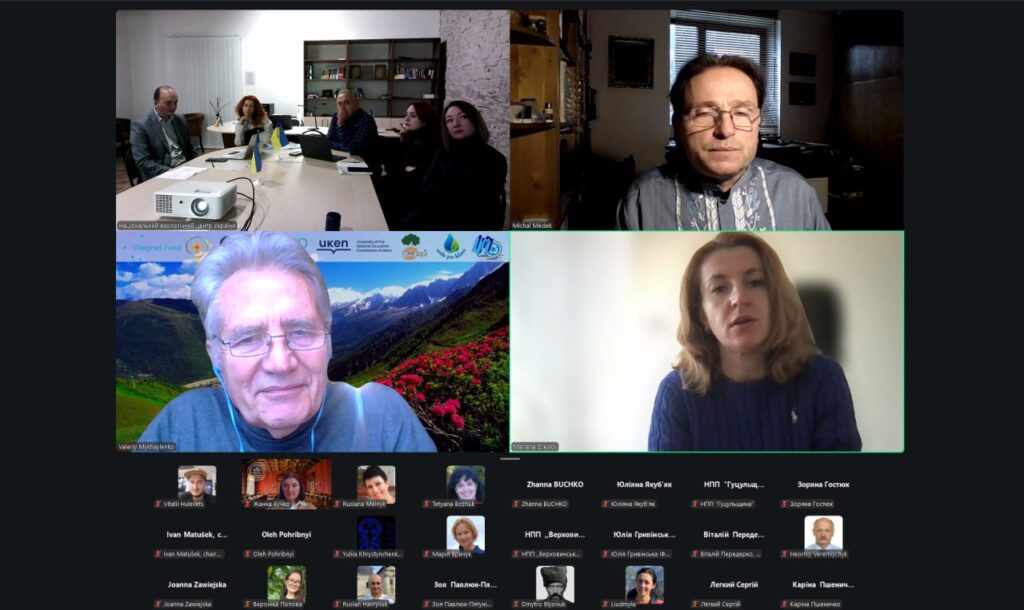
Michal Medek, Director of the Czech Institute for Heritage Interpretation (Czech Republic), presented practical approaches to working with natural and cultural heritage that can be adapted for Ukrainian protected areas. He also outlined potential avenues for cooperation between Ukraine and Romania through the Interpret Europe training programme. Special attention was given to international cooperation and the prospects for developing the “Science for the Carpathians” network.
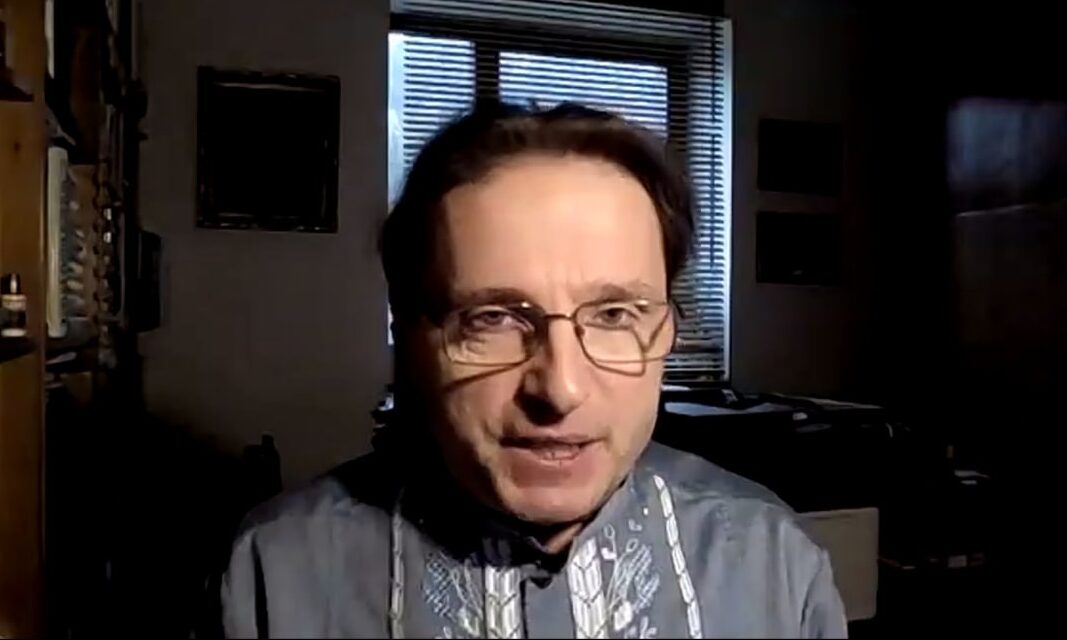
Valerii Mykhailenko, an expert of the National Ecological Centre of Ukraine and a representative of Kyiv Medical University, outlined the potential of this network as a platform for bringing together researchers, practitioners, and civil society organisations to promote the sustainable development of the Carpathian region. In his presentation, he also showcased the results of the international cooperation of the National Ecological Centre of Ukraine within the framework of the Visegrad Group project.
Further details on the project, its objectives, key activities, and main results were presented by the project leader, Deputy Head of the National Ecological Centre of Ukraine, Mykola Blyzniuk. He provided an overview of the project’s core activities, its practical outcomes, and participants’ success stories, highlighting the importance of cooperation between protected areas, museums, and educational institutions.
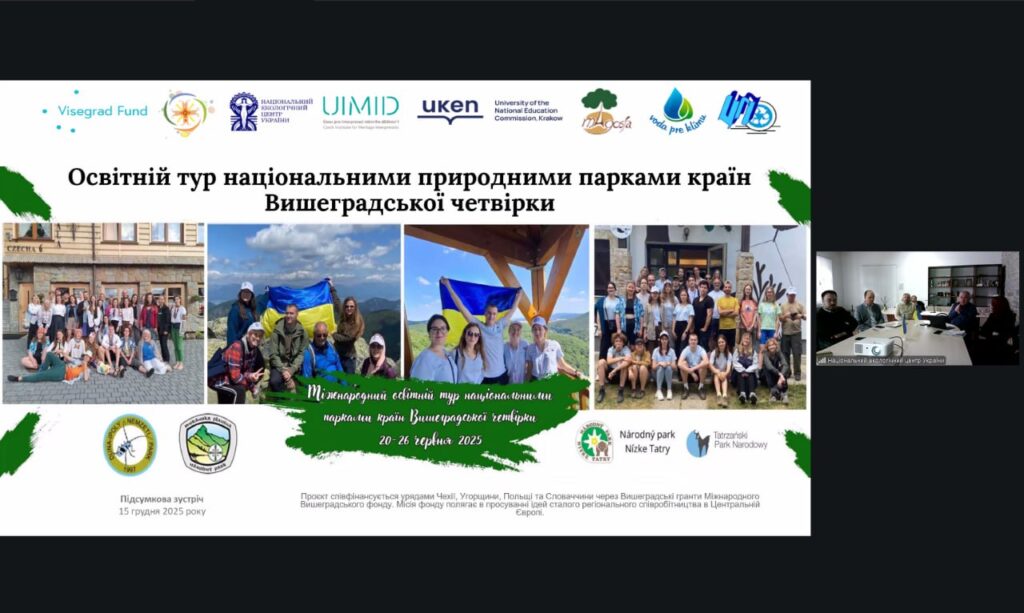
Student Project Presentations
An important component of the Wrap-up Meeting was the presentation of student projects that won the mini-grants implemented within the framework of the project. Participants had the opportunity to explore concrete examples of how heritage interpretation can function in practice.
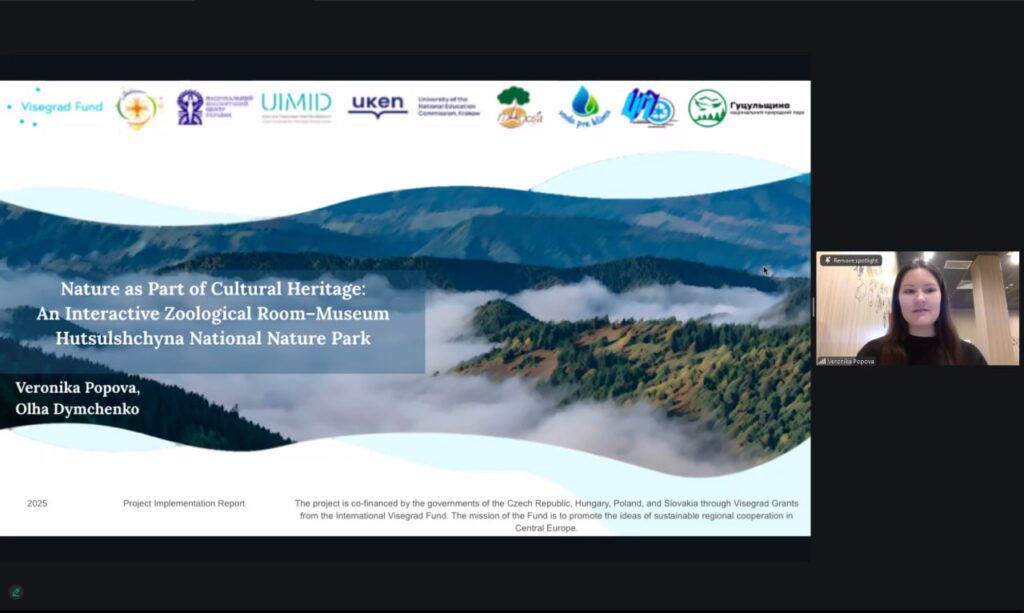
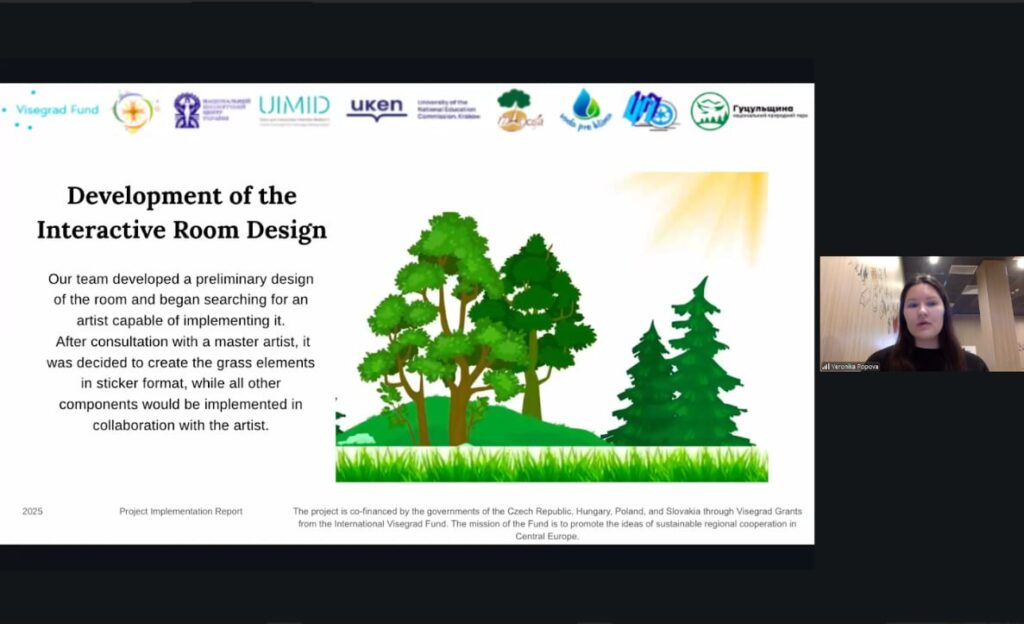
In particular, the project “Nature as Part of Cultural Heritage: an Interactive Zoological Room-Museum”, implemented at Hutsulshchyna National Nature Park, was presented by Veronika Popova and Olha Dymchenko. The project combines nature conservation themes with educational and interactive tools.
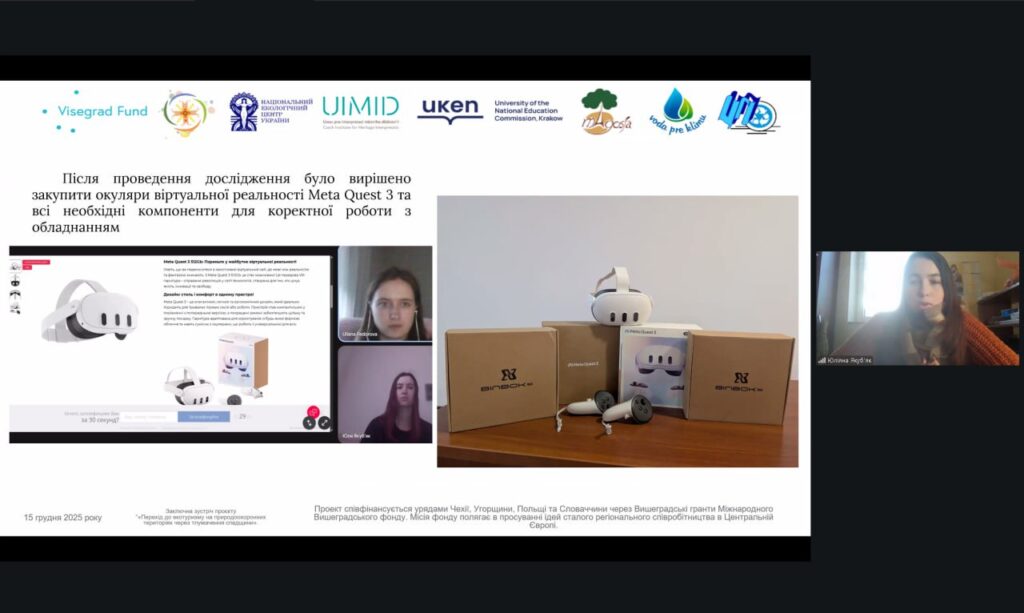
The project “Without Borders: a Virtual Journey for Everyone”, implemented at Carpathian National Nature Park, was presented by Yuliana Yakubiak and Uliana Fedorova. The initiative is aimed at expanding access to natural heritage through digital solutions and virtual formats.
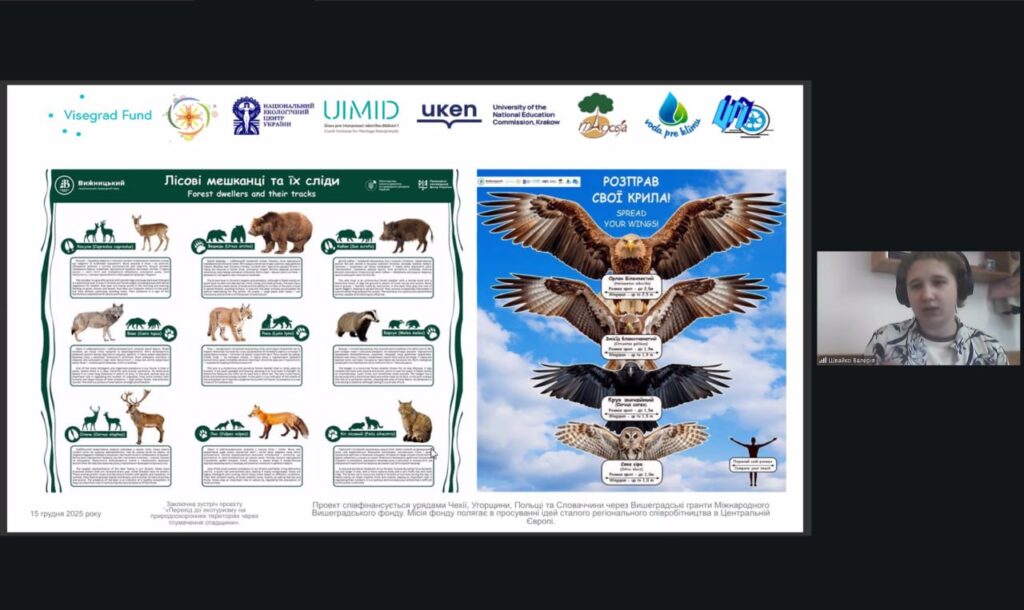
Issues of accessibility and inclusivity were also addressed in the project “Exploring Protected Area Heritage through Accessibility” at Vyzhnytskyi National Nature Park, presented by Valeriia Shvaiko and Yeva Batygina. The project demonstrates opportunities to engage a broader audience in exploring protected areas.
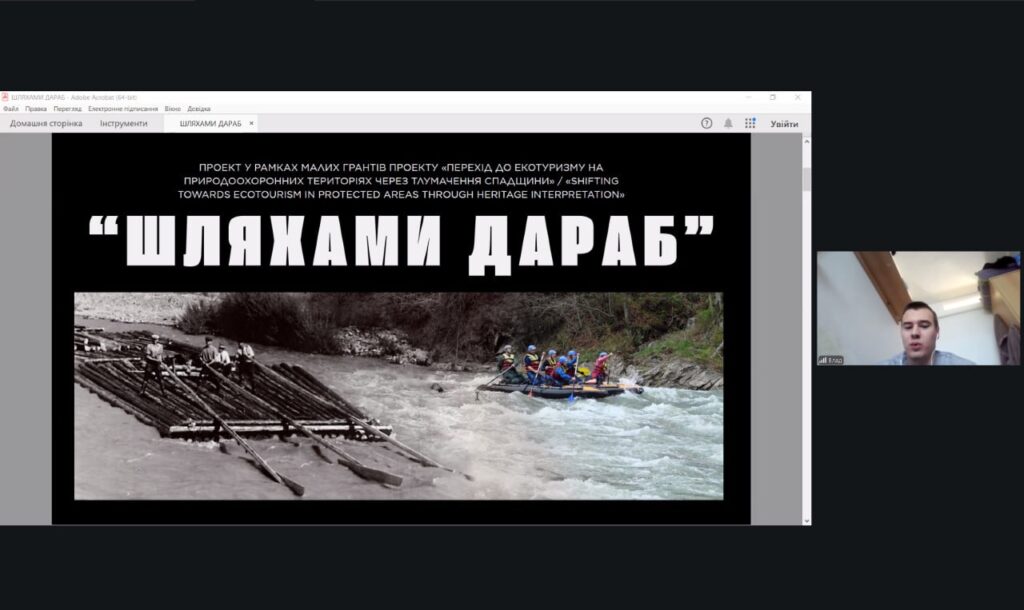
The project “Along the Darabs”, implemented in Verkhovynskyi National Nature Park, was also presented by Vladyslav Zelenchuk and Vasyl Piteliak. The initiative integrates the natural, cultural, and historical heritage of the region, offering new formats for ecotourism routes.
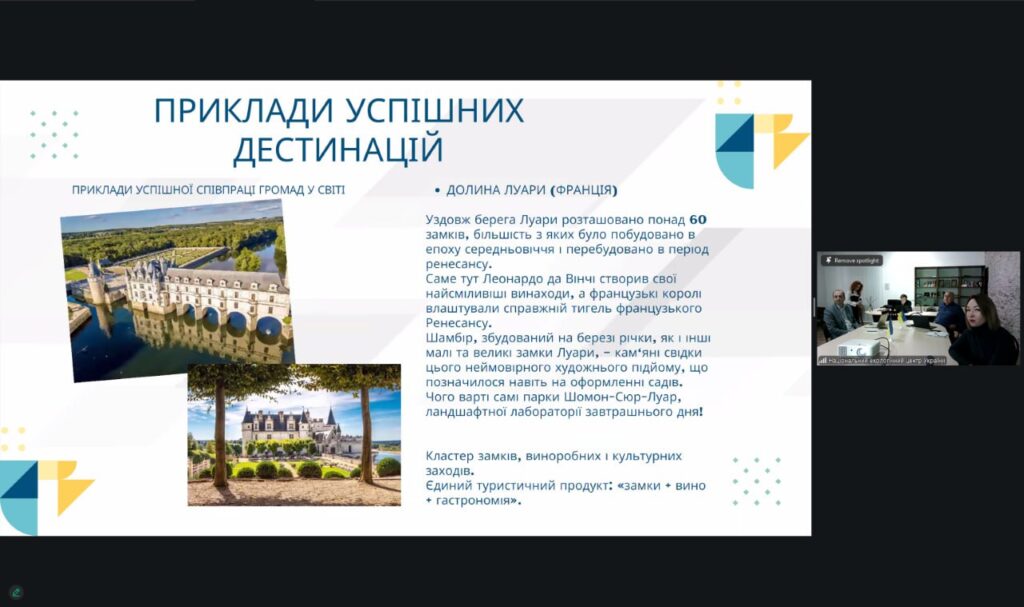
The final stage of the meeting was an idea fair, during which participants discussed prospects for international cooperation. In particular, a presentation was delivered on the activities of the joint municipal enterprise “Ponyzzia.”
Representatives of the National Ecological Centre of Ukraine, the Kamianets-Podilskyi State Historical Museum-Reserve, Podilski Tovtry National Nature Park, and other interested organisations joined the discussion.
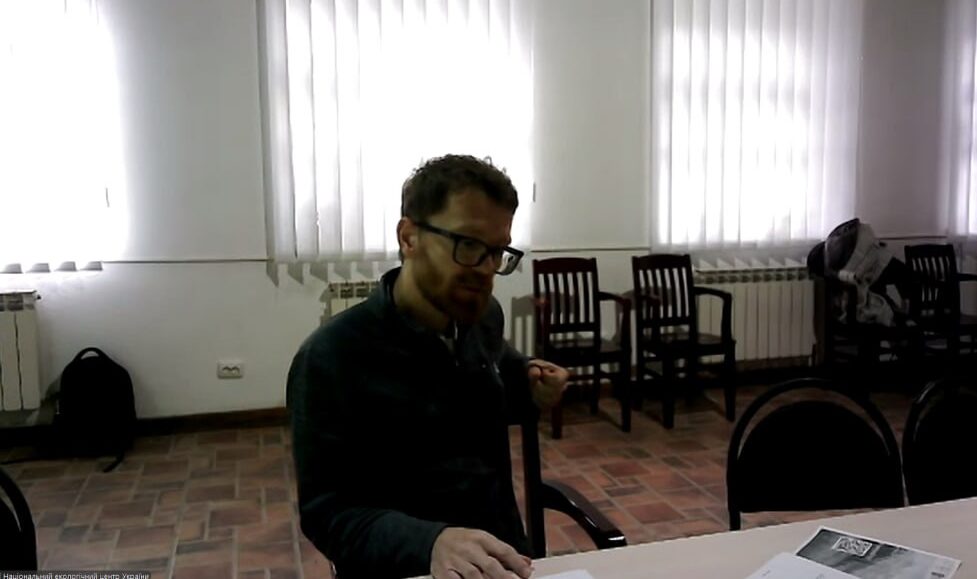
Participants discussed potential joint initiatives, directions for further cooperation, and plans for developing ecotourism in protected areas through heritage interpretation.
The discussions culminated in the signing of a Memorandum of Cooperation between the National Ecological Centre of Ukraine and the joint municipal enterprise “Ponyzzia,” formalising the parties’ intentions to pursue further joint activities in the fields of ecotourism development and the interpretation of natural and cultural heritage.
We express our sincere gratitude to all partners, speakers, and participants for their active engagement, insightful presentations, and constructive dialogue.
Special thanks go to the Kamianets-Podilskyi State Historical Museum-Reserve for its hospitality and support in organising the in-person part of the event, as well as to the International Visegrad Fund for supporting the implementation of the project.
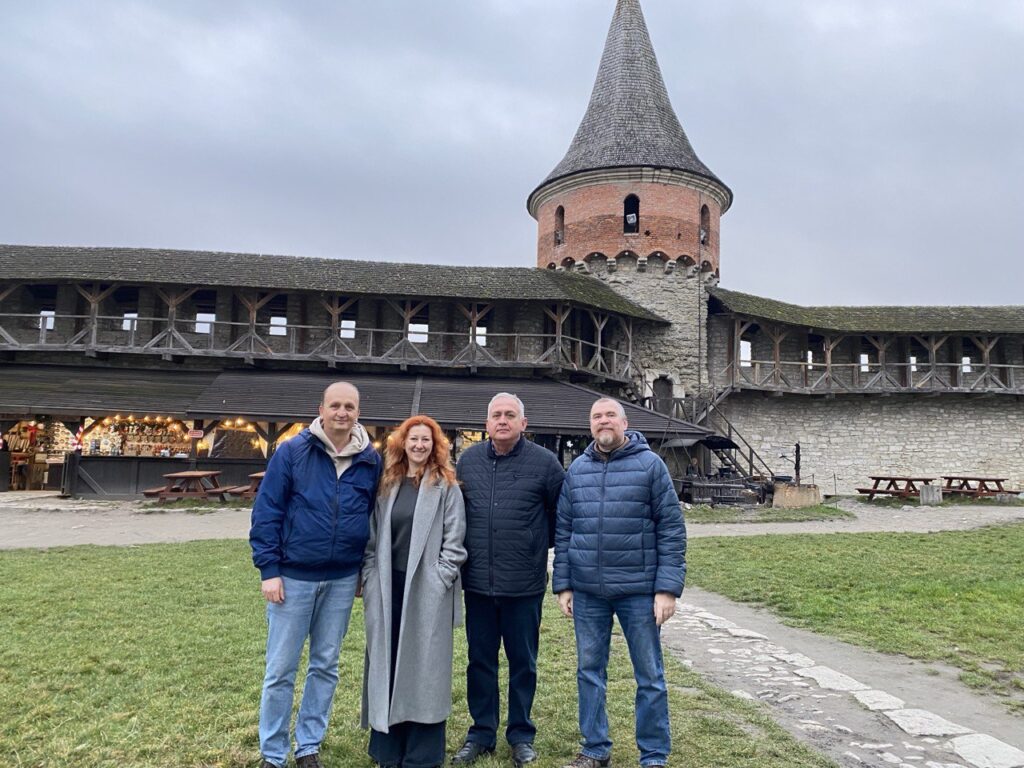
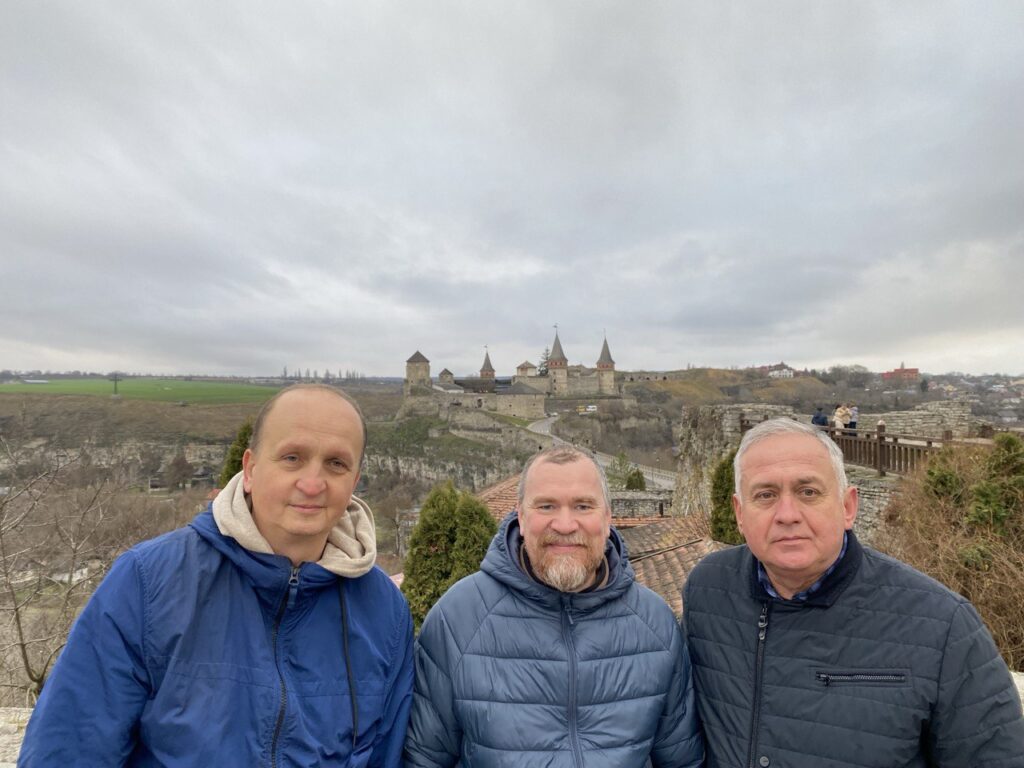
Thanks to the joint efforts of all involved parties, the Wrap-up Meeting became an important platform for exchanging experiences, presenting results, and shaping future directions for international cooperation in the field of ecotourism and the interpretation of natural and cultural heritage.
The online broadcast can be viewed here: https://www.facebook.com/share/v/1ASXJsv483/

The project is co-financed by the Governments of Czechia, Hungary, Poland and Slovakia through Visegrad Grants from International Visegrad Fund.
The mission of the fund is to advance ideas for sustainable regional cooperation in Central Europe.